
How can a textile company prepare for the Carbon Border Adjustment Mechanism (CBAM)?
Posted on May 7, 2024
Textile companies can take several steps to prepare for the Carbon Border Adjustment Mechanism (CBAM). Here are some key actions they can consider:
- Assess the Scope and Origin of Imported Products:
- Understand the range of goods your company imports and their origins. This assessment will help you identify which products fall under the CBAM framework.
- Evaluate Greenhouse Gas (GHG) Data:
- Collect and analyze GHG data from companies outside the EU. This information is crucial for calculating the embedded emissions associated with imported items.
- Establish a GHG Reporting System:
- Set up a robust GHG reporting system that captures both direct and potentially indirect emissions related to imported goods. Accurate reporting is essential for compliance with CBAM requirements.
- Prepare for Registration and Reporting:
- Familiarize yourself with the new CBAM Authority and its processes.
- Ensure your company is ready to register and report as required by CBAM regulations.
By taking these steps, textile companies can better navigate the impact of CBAM and align their practices with sustainability goals.
Key Aspects of CBAM
Since the start of 2023 the scope of this regulation has narrowed, removing previously proposed chemicals and polymers, but clarity has improved on the detailed nature of data reporting requirements.
Surrender of the declared GHG emissions of products will be done through the purchasing of CBAM certificates, based on the EU ETS pricing. These certificates, instrumental in the carbon price framework, will be procured from a centralised platform overseen by the EC (European Commission). The fees linked to these certificates will be calculated by the EC, tethered to the conclusive proceedings of EU ETS allowances.
Two costs are created on businesses through CBAM:
- Purchase of CBAM certificates
- Collecting and reporting emissions data
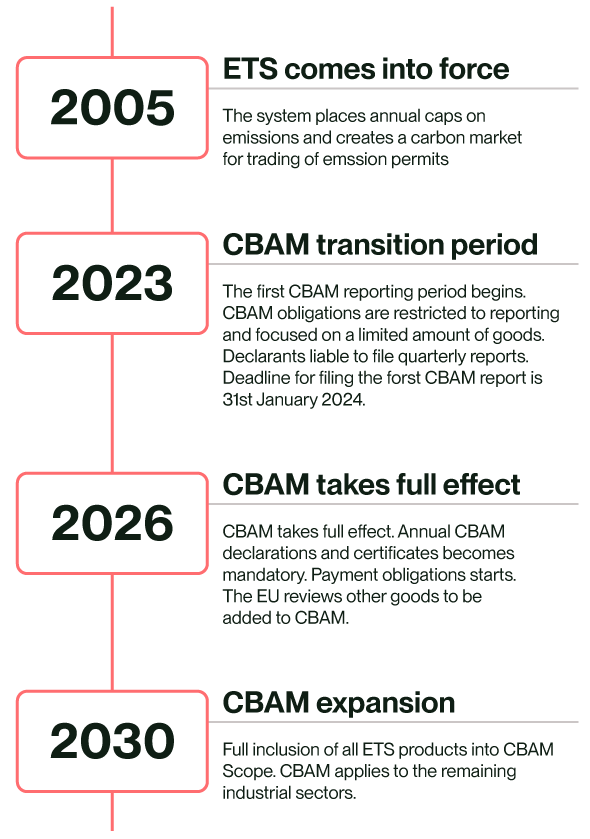
Additional products are planned to be included in the reporting requirements by 2026, and the full inclusion of all EU ETS products is planned by 2030.
In 2026 authorisation will be required to import CBAM goods, and reporting will switch to annual declarations. The supply of CBAM certificates is expected to be the financial levy that will be used to cover the GHG footprint from the data declarations made for the previous year.
Timeline
May 2023 marked the official ratification of CBAM, and reporting periods begin from 1st October 2023. The schedule of declarations follows a regular quarterly cycle. The inaugural report submission is slated for January 31, 2024 in respect of goods imported during the fourth quarter of 2023. The last report should be submitted by 31 January 2026 in respect of goods imported during the fourth quarter of 2025.