
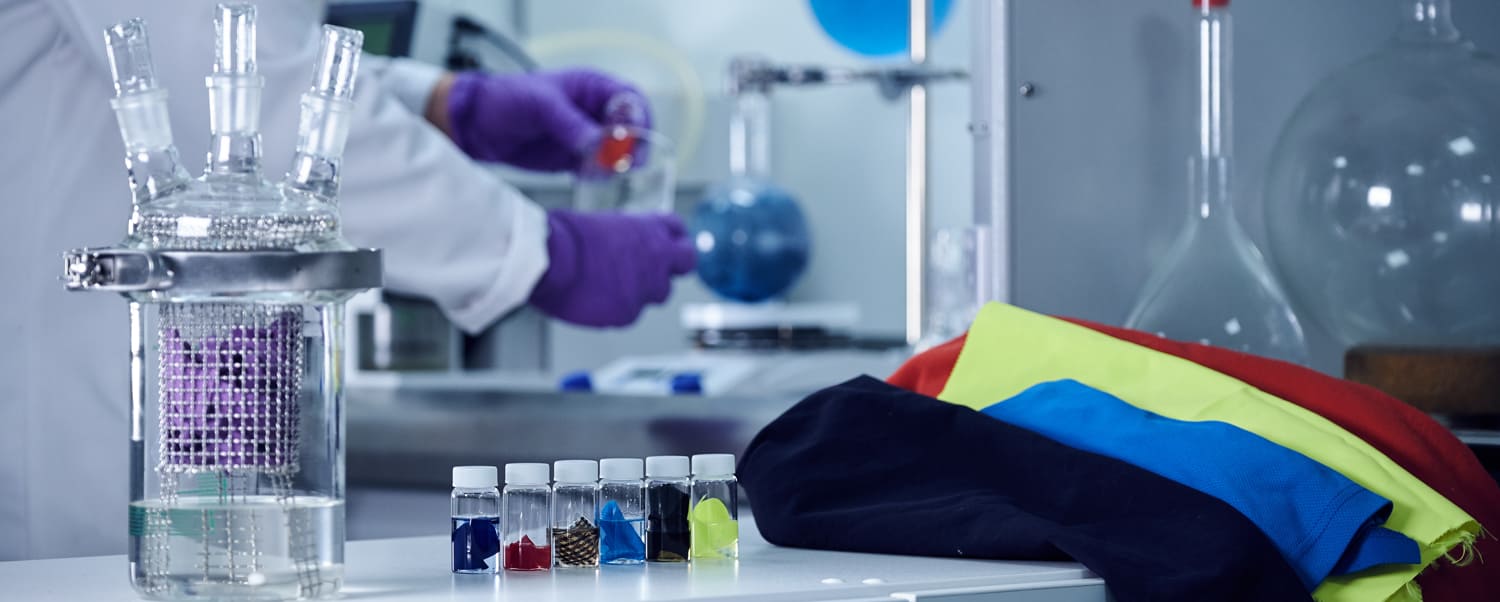

Pre-treatment is the process that are used to remove impurities from fibres or fabrics to make it dyeable or printable. Natural and synthetic fibres that are contained naturally and secondary impurities that are added during spinning, knitting and weaving process are needed to remove satisfactory before subsequent process like dyeing and finishing to avoid any uneven coloration and required fabric properties.
| Pretreatment | |||||||
|---|---|---|---|---|---|---|---|
| Product | Core Function | Features Description | Biodegradability Test (OECD 302B) | Biobased Carbon Content Test (ASTM6866-21) | CO₂e Footprint Reduction | ||
| Biobased | Fossil based | Biobased | Fossil based | Biobased | |||
| Biowet – 117 | Wetting agent | Biobased Ethoxylated free, propoxylated free, quat free wetting agent | 95% | 10 – 60% | 100% | 0% | -99% |
| Bioquest – 86 | Squestering agent | Biobased Ethoxylated free, quat free, phosphate free, silcate free, acrylic polymer free squestering agent | 93% | 10 – 60% | 86% | 0% | -82% |
| Biostab – SFM | Stabilizer | Biobased Ethoxylated free, propoxylated free, quat free, phosphate free, silicate free, acrylic polymer free hydrogen peroxide stabilizer | 94% | 10 – 60% | 87% | 0% | -98% |
| Bioacid – CAN | Neutralizer | Biobased Ethoxylated free, propoxylated free, quat free, phosphate free, silicate free, acrylic polymer free alkaline neutralizer | 86% | 10 – 60% | 99% | 0% | -99% |
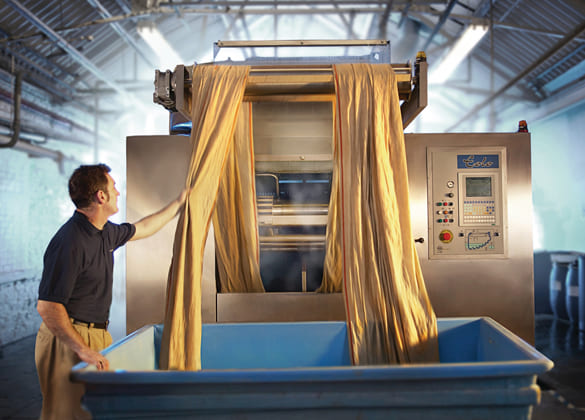
Dyeing needs dyeing auxiliaries to improve the dyeing uniform distribution of dyes on the fabrics and prevent or correct the unevenness or streakiness of dyeing. Besides, some dyeing auxiliaries like dispersing agents can prevent the aggregation or precipitation of dyes in the dye bath and keep them stable and fine disperse state. Others also have functions to act as a chelating agent, electrolytes, pH control agents, reducing agents, oxidizing agents as well as anti-foaming agents.
| Dyeing | |||||||
|---|---|---|---|---|---|---|---|
| Product | Core Function | Features Description | Biodegradability Test (OECD 302B) | Biobased Carbon Content Test (ASTM6866-21) | CO₂e Footprint Reduction | ||
| Biobased | Fossil based | Biobased | Fossil based | Biobased | |||
| Biosperse – EP | Dispersing & Levelling agent | Biobased Ethoxylated free, propoxylated free, quat free, phosphate free, silicate free, acrylic polymer free levelling agent | >95% | 10 – 60% | 97% | 0% | -94% |
| Biolube – JET | Lubricating agent | Biobased Ethoxylated free, propoxylated free, quat free, phosphate free, silicate free, acrylic polymer free Anti-crease lubricating agent | >95% | 10 – 60% | 97% | 0% | -99% |
| Biosurf – GXN 200 | soaping agent | Biobased Ethoxylated free, propoxylated free, quat free, phosphate free, silicate free, acrylic polymer free Post reactive dyeing soaping agent | >95% | 10 – 60% | 67% | 0% | -97% |
| Biobuff – SF | Silicate free dyeing for CPB dyeing | Biobased Ethoxylated free, propoxylated free, quat free, phosphate free, silicate free, acrylic polymer free Alkaline buffer for Cold Pad Batch dyeing | >95% | 10 – 60% | 97% | 0% | -99% |
| Biofoamex – DF | Defoaming agent | The world first 99% Biobased with silicone free Defoaming agent | >96% | 10 – 60% | 99% | 0% | -100% |
| Biofoamex – AF | Anti-foaming agent | The world first 99% Biobased with silicone free Anti-foaming agent | >95% | 10 – 60% | 99% | 0% | -100% |
| Bioamp – 95 | pH Neutralizer and Moisturizer | Biobased pH neutralizer and moisturizer for skin care products for replacing those Aminomethyl Propanol based moisturizer | >95% | 10 – 60% | 99% | 0% | -100% |
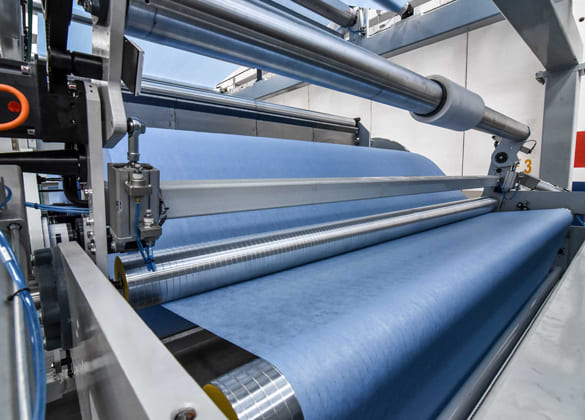
Fabrics required to apply different finishing agents that can help to improve the quality and performance of textile materials after dyeing or printing. For example, fixing agents can enhance the color fastness of dyed or printed fabrics and prevent dyes from bleeding, fading or washing out prematurely. Softening agents can improve the smoothness and hand feel and roughness and abrasion properties of a fabric. There are many other finishing agents that can modify or improve the fabric performance such as stiffening agent, antimicrobial, water repellant and flame retardant as well.
| Finishing | |||||||
|---|---|---|---|---|---|---|---|
| Product | Core Function | Features Description | Biodegradability Test (OECD 302B) | Biobased Carbon Content Test (ASTM6866-21) | CO₂e Footprint Reduction | ||
| Biobased | Fossil based | Biobased | Fossil based | Biobased | |||
| Bioresin – X7 | Resin Finish | Biobased DMHHEU free Bioresin for winkle free effect | >95% | 10 – 60% | 97% | 0% | -95% |
| Biobind – SS | Resin Binder | Biobased resin Binder for applying Biobased resin | >95% | 10 – 60% | 100% | 0% | -99% |
| Biosize – CT | Sizing Agent | Biobased sizing agent for yarn and fabric finishing | >95% | 10 – 60% | 100% | 0% | -99% |
| Biosoft – C90 | Softener | Biobased Ethoxylated free, propoxylated free, quat free, phosphate free silicate free, acrylic free Biosoftener | >95% | 10 – 60% | 100% | 0% | -99% |
| Biosoft FC-90 | Softener | Biobased Ethoxylated free, propoxylated free, quat free, phosphate free silicate free, acrylic free Biosoftener | >95% | 10 – 60% | 100% | 0% | -99% |
| Biosilicone – HPH | Bio-Silicone Softener | Biobased Silicone Softener Novel Polyblock softener | >95% | 10 – 60% | 100% | 0% | -99 % |
| Printing | |||||||
|---|---|---|---|---|---|---|---|
| Product | Core Function | Features Description | Biodegradability Test (OECD 302B) | Biobased Carbon Content Test (ASTM6866-21) | CO₂e Footprint Reduction | ||
| Biobased | Fossil based | Biobased | Fossil based | Biobased | |||
| Bioprint – COL-WDC | Water based Discharge Printing | Water based discharge printing for zinc sulfoxylate discharge printing, low nickle and tin in ppm due to solvent free chemistry | Under Test | 10 – 60% | N/A | N/A | N/A |
| Bioprint Uber White – DC | Water based Discharge Printing | Water based discharge printing for zinc sulfoxylate discharge printing, low nickle and tin in ppm due to solvent free chemistry | Under Test | 10 – 60% | N/A | N/A | N/A |
| Bioprint COL – 952 | Water based Discharge Printing | Water based discharge printing for zinc sulfoxylate discharge printing, low nickle and tin in ppm due to solvent free chemistry | Under Test | 10 – 60% | N/A | N/A | N/A |
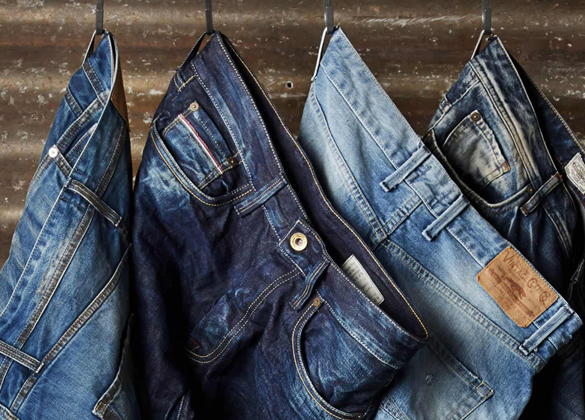
This method is based on using a special feature of biobased tinting effect where a very less amount of tint is involved & pigments or reactive dyes is being used to do this process. This is being done to change the hue or tone of the colorants. Garments after applying with this method, it can give the garments with a vintage or muddy look. The method can use less water which saves water and provides a shorter cycle of process which also gives a good appearance for the garments.
| Special Effect for Denim | |||||||
|---|---|---|---|---|---|---|---|
| Product | Core Function | Features Description | Biodegradability Test (OECD 302B) | Biobased Carbon Content Test (ASTM6866-21) | CO₂e Footprint Reduction | ||
| Biobased | Fossil based | Biobased | Fossil based | Biobased | |||
| Innodenim-CFP | Denim/Vintage Look using pigments | Water based Anti migrating polymer for pigments dyeing wash down look | Under Test | 10 – 60% | N/A | N/A | N/A |
| Innodenim-CFR | Denim/Vintage look using reactive dyes | Water based Anti migrating polymer for reactive dyes wash down look | Under Test | 10 – 60% | N/A | N/A | N/A |
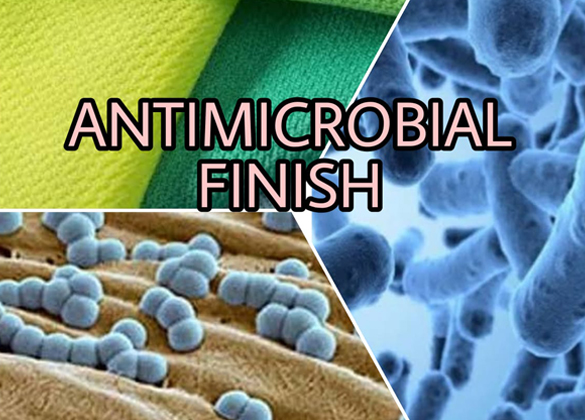
This process involves applying a thin layer of an anti-microbial agent on the surface of the fabric by means of either exhaustion or padding methods. The effect can be fixed on the fabric by drying and curing under a stenter. This product is the first quat free, silver free, copper free & RS: free ECHA approved anti-microbial agent for textile products. It is also test approved under the HCOV229E test.
| Antimicrobial | |||||||
|---|---|---|---|---|---|---|---|
| Product | Core Function | Features Description | Biodegradability Test (OECD 302B) | Biobased Carbon Content Test (ASTM6866-21) | CO₂e Footprint Reduction | ||
| Biobased | Fossil based | Biobased | Fossil based | Biobased | |||
| Biocide Kill – XCOV | Anti-microbial | The world first quat free, silver free, copper free, RSL free, ECHA approved next generatoion Anti-microbial for textile finishing. HCoV229E approval tested | N/A | N/A | N/A | N/A | N/A |
Copyright © 2026, Innotex Enterprise Ltd. All rights reserved | Developed by AlgoPage IT Solutions Pvt. Ltd.