
Carbon Credit Trading Market
Posted on May 3, 2024
What is Carbon Credits?
You can think of carbon credits as a “permission slip” for a company to emit up to a certain set amount of C02e that year.
When it comes to the sale of carbon credits within the carbon marketplace, there are two significant, separate markets to choose from.
- One is a regulated market, set by “cap-and-trade” regulations at the regional and state levels.
- The other is a voluntary marketwhere businesses and individuals buy credits (of their own accord) to offset their carbon emissions.
Think of it this way: the regulatory market is mandated, while the voluntary market is optional.
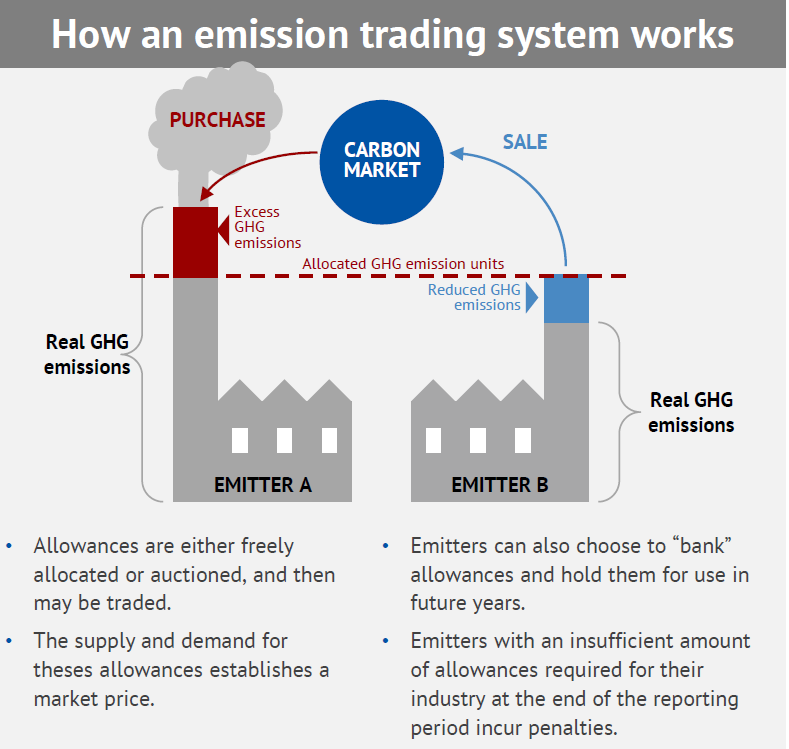
When it comes to the regulatory market, each company operating under a cap-and-trade program is issued a certain number of carbon credits each year. Some of these companies produce less emissions than the number of credits they’re allotted, giving them a surplus of carbon credits.
On the flip side, some companies (particularly those with older and less efficient operations) produce more emissions than the number of credits they receive each year can cover. These businesses are looking to purchase carbon credits to offset their emissions because they must.
China is about 27% of global CO2 emission in 2019 which is about 4 billion tons of CO2. China president Xi admits to hit the peak emission by 2030 and achieve carbon neutral for the whole country by 2060.
How can a manufacturer calculate the carbon emission from production?
Manufacturers can collect energy consumption data from each of their processes and convert these data using the appropriate emission factor for each source and scope. These energy consumption or their carbon footprint can be converted into emission factors based on the calculations provided by Ecoin Vent or LCA Commons for calculating the emission factors. These emission factors are the average amount of CO2e that emitted per unit of energy, fuel, materials or activity.
Carbon Credits Trading Market
There is a control and oversee the amount of greenhouse gas emission from companies and organizations in China by Ministry of Ecology & Environment. Allotting a limit to allow them to emit certain amount of CO2/year which is termed as carbon credits.
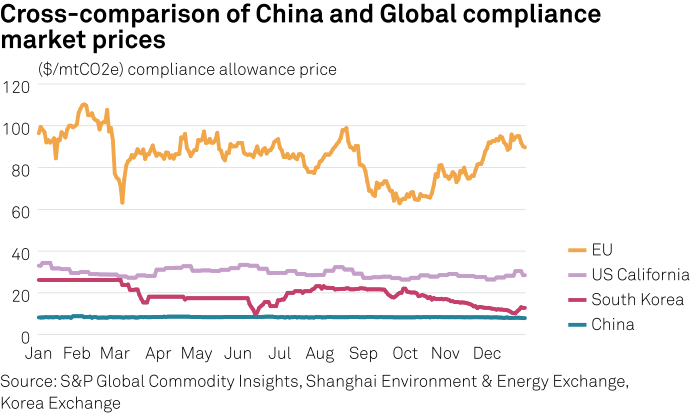
The carbon credits are oversee by the Ministry of Ecology & Environment and these credits are trade through the stock market in Shanghai Environment & Energy Exchange. The 1st day of trading is 160,000 tons of CO2 valued at US$1.2million which was about RMB48/tons of CO2 and closed at a trading volume of 410,000 tons of CO2 credits at RMD 0.214 billion which is about RMB51.23/tons of CO2. The price of carbon credit was increased up to RMB180 – 200/tons of CO2 in 2019.
When a company or manufacturer who emit over the allotting credits, they can buy credits from the market and exchange for extending their emission within the total amount of carbon credit they bought from the market. On the other hand, for those company or manufacturers who emit below their allotting credits from the government can sell their carbon credits to the market at the price that accept by the buyers.